
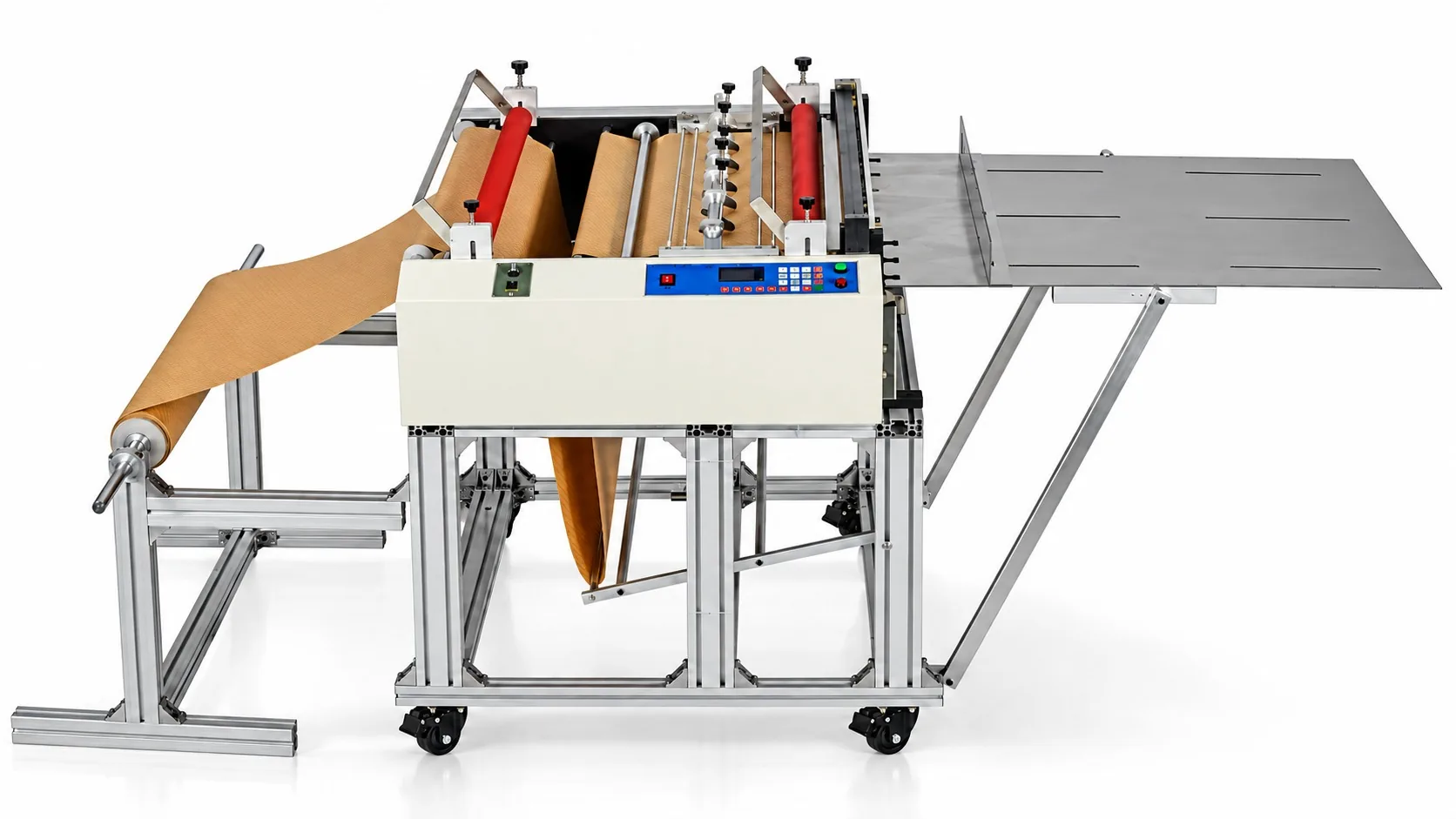
For many small workshops, fabric cutting is still done by hand. At the beginning, manual cutting may seem flexible and low-cost. But as orders increase, it often becomes one of the slowest steps in production.
Uneven cutting size, repeated measuring, operator fatigue, and material waste can all reduce efficiency. For small garment workshops, sample rooms, upholstery makers, textile processors, and craft manufacturers, a compact fabric cutting machine can be a practical solution to improve cutting speed without investing in a large production line.
Why Manual Fabric Cutting Takes Too Much Time
Manual cutting depends heavily on the operator’s experience. Before each cut, workers usually need to measure, mark, align, and check the material. When the same size must be cut repeatedly, this process becomes time-consuming.
Common problems include:
- Slow cutting speed for repeated sizes
- Inconsistent cutting length or width
- Higher labor cost during busy seasons
- Operator fatigue after long working hours
- More material waste caused by cutting errors
For small batch production, these problems may not look serious at first. But over time, they affect delivery time, product quality, and order capacity.
How a Fabric Cutting Machine Improves Workshop Efficiency
A compact fabric cutting machine is designed to make the cutting process faster, more stable, and easier to control. Instead of measuring and cutting every piece manually, the operator can set the required length, feed the material, and let the machine complete repeated cutting work.
This helps small workshops save time in three main ways.
1. Faster Repeated Cutting
When a workshop needs to cut many pieces in the same size, manual cutting is inefficient. A fabric cutting machine can repeat the cutting length more consistently, which reduces the time spent on measuring and marking.
This is especially useful for small batch orders, sample production, packaging materials, garment accessories, textile strips, non-woven fabric, elastic bands, leather pieces, and similar materials.
2. More Stable Cutting Accuracy
In manual cutting, small size differences are common. These differences may cause problems in sewing, assembly, packing, or later processing.
A compact automatic cutting machine can help keep each piece more uniform. Stable cutting size improves the overall production flow and reduces the need for rework.
3. Lower Dependence on Skilled Labor
Skilled cutting workers are important, but not every workshop has enough experienced operators. A fabric cutting machine makes the cutting process easier to standardize.
New workers can operate the machine after basic training, while experienced workers can focus on more valuable tasks such as quality control, sample development, or production management.
Suitable Applications for Small Workshops
A small fabric cutting machine is not only for garment factories. It can also be used in many industries where flexible materials need to be cut into fixed lengths or shapes.
Typical applications include:
- Garment accessories
- Non-woven fabric sheets
- Polyester fabric cutting
- Knitted fabric cutting
- Leather and synthetic leather pieces
- Elastic band cutting
- Ribbon, tape, and webbing
- Packaging textile materials
- Sample room cutting
- Small batch custom production
For workshops that handle different materials, it is important to choose a machine that supports adjustable cutting length, stable feeding, and suitable blade structure.
What to Check Before Choosing a Fabric Cutting Machine
Before buying a fabric cutting machine, small workshops should not only compare price. The machine must match the real production needs.
Here are several key points to check.
Material Type
Different materials require different cutting methods. Soft fabric, non-woven fabric, leather, knitted fabric, and elastic materials may behave differently during feeding and cutting. Always confirm whether the machine is suitable for your main materials.
Cutting Width and Length
The cutting width should match the maximum material size you process. The cutting length range should also meet your normal order requirements.
Feeding Stability
Stable feeding is very important for cutting accuracy. If the material slips or moves unevenly, the final size may not be consistent.
Operation Simplicity
For small workshops, a machine should be easy to set up, operate, clean, and maintain. A simple control panel and clear adjustment system can reduce training time.
Maintenance and Blade Replacement
Cutting quality depends on the blade condition. A good machine should allow convenient blade maintenance or replacement, especially for workshops with frequent production changes.
A Practical Investment for Small Batch Production
For small workshops, the goal is not always to build a large automated production line. In many cases, the first step is simply to reduce slow manual work.
A compact fabric cutting machine can help workshops improve cutting efficiency, reduce labor pressure, and keep production size more consistent. It is a practical choice for businesses that want to handle more orders without greatly increasing labor cost.
Conclusion
Manual cutting may work for very small orders, but it becomes a bottleneck when production grows. A fabric cutting machine gives small workshops a more efficient way to handle repeated cutting tasks.
By choosing the right machine according to material type, cutting size, feeding method, and operation needs, small manufacturers can reduce manual cutting time and build a more stable production process.
FAQ
Is a fabric cutting machine suitable for small workshops?
Yes. Compact fabric cutting machines are suitable for small workshops, sample rooms, and small batch production. They help reduce repeated manual cutting work and improve cutting consistency.
What materials can a fabric cutting machine cut?
Depending on the machine design, it can cut fabric, non-woven fabric, polyester fabric, knitted fabric, leather, elastic bands, ribbons, tapes, and other flexible materials.
Can one operator use the machine?
In most small workshop applications, one trained operator can control the machine, set the cutting length, feed the material, and collect the finished pieces.
How does it reduce labor cost?
The machine reduces the time needed for measuring, marking, and repeated manual cutting. This allows workers to complete more cutting tasks in less time.
What should I consider before buying?
You should check material compatibility, cutting width, cutting length range, feeding stability, blade type, operation method, and maintenance requirements.