
Start with the direction of travel
Slitting divides a moving roll into narrower strips along its direction of travel. Cross-cutting cuts across the width to produce a specified length. The two processes define different dimensions of the finished part.
Work back from the finished part
First define whether you need strips or sheets, then specify length and width. If a wide roll needs to become several narrow strips cut to length, include the strip count, each strip width and the cross-cut length.
- Input: material, thickness, web width and stretch.
- Output: each strip width, cut length and permitted tolerance.
- Edge finish: whether fraying, pressure marks or other visible changes are acceptable.
What should you check on the product page?
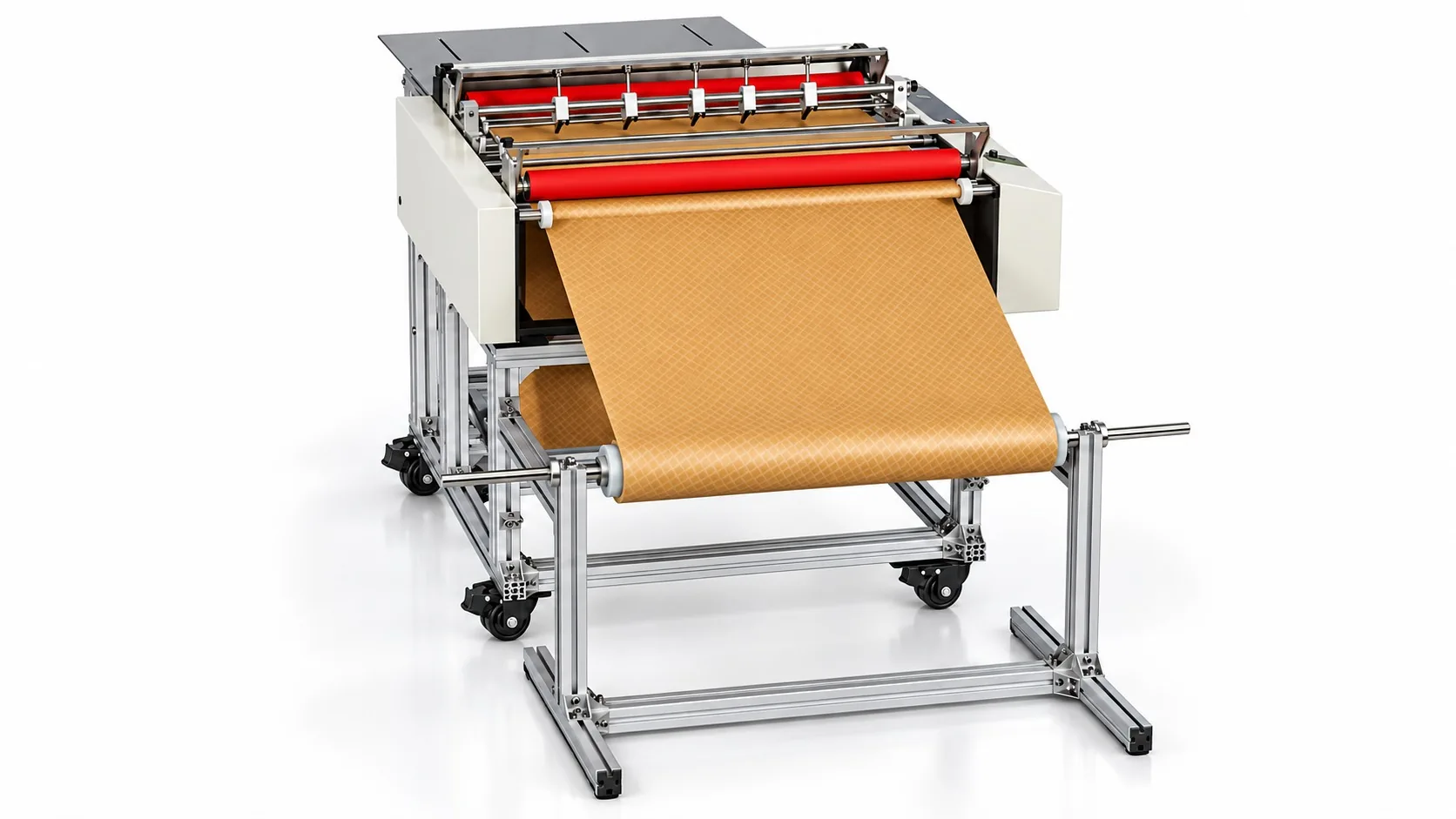
The HESPER Fully Automatic Cut-to-Length Machine for Polyester Fabric, Nonwoven Fabric, Knitted Fabric, Leather and Elastic Bands combines unwinding, feeding, longitudinal slitting and cut-to-length cross-cutting. Its product page shows the controls, blade, feed rollers, roll stand and speed controller, alongside a working video and model-width information.
Model width is only one part of selection. Material suitability, minimum slit width and working output still need to be confirmed against the actual material and finished-part requirements.
Start with a concise brief
Combine material photos, input-roll dimensions, finished length and width, tolerance and target output in one enquiry. Leave unknown details blank and identify what still needs to be confirmed.